
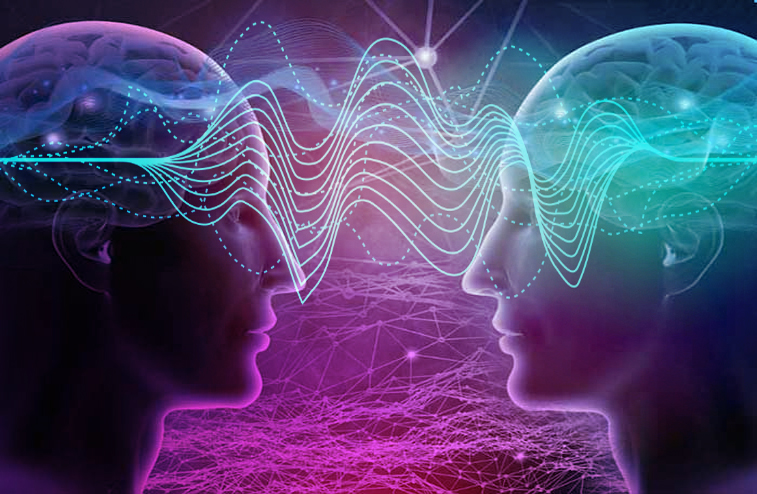
In the vast landscape of human experience, there exist phenomena that challenge our understanding of the world around us. Among these, perhaps one of the most intriguing is telepathy—the purported ability to communicate thoughts, feelings, or information from one mind to another without the use of any known sensory channels. Telepathy has fascinated scientists, philosophers, and mystics alike for centuries, raising profound questions about the nature of consciousness and the boundaries of human perception.
Unraveling the Mystery of Telepathy
Telepathy, derived from the Greek words “tele,” meaning distant, and “pathos,” meaning feeling or perception, refers to the direct transmission of thoughts or sensations between individuals without the mediation of the known senses. While accounts of telepathic experiences can be found throughout history and across cultures, scientific exploration of the phenomenon has been met with skepticism and controversy.
Historical and Cultural Perspectives
The concept of telepathy has deep roots in human history and culture. Ancient civilizations, such as the Greeks, Egyptians, and Hindus, documented instances of what we might now interpret as telepathic communication in their myths, religious texts, and philosophical writings. The belief in telepathy persisted through the ages, influencing religious traditions, mystical practices, and even early scientific inquiry.
Scientific Investigations
Despite its long history, telepathy remains a highly contentious topic within the scientific community. While anecdotal evidence and personal accounts of telepathic experiences abound, rigorous scientific studies validating the phenomenon have been elusive. Skeptics argue that the lack of reproducible experimental evidence and the presence of confounding variables undermine the credibility of telepathy as a genuine phenomenon.
However, proponents of telepathy point to a growing body of research suggesting the possibility of non-local forms of communication between individuals. Studies in parapsychology, psychology, and neuroscience have explored various aspects of telepathy, including extrasensory perception (ESP), mind-matter interactions, and the role of consciousness in facilitating non-local communication.
The Role of Consciousness
At the heart of the telepathy debate lies the question of consciousness—our subjective awareness of ourselves and the world around us. Telepathy challenges conventional notions of consciousness by suggesting that the mind may possess inherent capacities beyond those currently understood by science. Proponents of telepathy argue that consciousness may transcend the physical confines of the brain, allowing for the direct exchange of information between individuals at a fundamental level.
Practical Applications and Implications
Beyond its theoretical implications, telepathy has captured the imagination of artists, writers, and filmmakers, inspiring countless works of fiction and speculation about the nature of human communication. From psychic detectives in crime novels to telepathic aliens in science fiction, the concept of telepathy continues to fascinate and intrigue audiences around the world.
In addition to its cultural and artistic significance, telepathy holds potential practical applications in fields such as psychology, medicine, and interpersonal communication. If validated, telepathy could revolutionize our understanding of human relationships, mental health, and the nature of consciousness itself.
Challenges and Future Directions
Despite centuries of speculation and inquiry, the scientific study of telepathy remains fraught with methodological challenges and controversy. Skeptics argue that the burden of proof lies with proponents of telepathy to provide compelling empirical evidence supporting its existence, while proponents contend that the nature of telepathic phenomena may defy conventional scientific methods of inquiry.
Moving forward, the exploration of telepathy requires interdisciplinary collaboration and open-mindedness on the part of researchers and skeptics alike. By integrating insights from psychology, neuroscience, quantum physics, and consciousness studies, scientists may uncover new avenues for investigating the nature and potential of telepathic communication.
Conclusion
In the quest to unravel the mysteries of human telepathy, we are confronted with profound questions about the nature of consciousness, the limits of human perception, and the interconnectedness of minds across space and time. While skepticism and uncertainty persist, the allure of telepathy persists as a testament to the enduring fascination with the unknown and the unexplored depths of the human experience. As we continue to probe the frontiers of science and consciousness, the exploration of telepathy invites us to reconsider our assumptions about the nature of reality and the possibilities that lie beyond the boundaries of our current understanding.